


There are many ways in which particulate filter cleaning is done today, but do all methods really work?
How to clean the particulate filter effectively is one of the most frequently asked questions about this component due to clogging and failure problems.
The particulate filter is an essential part of diesel vehicles, designed to reduce pollutant emissions. However, over time, soot and other debris can build up, affecting its performance.
That's why in this article we explain how to clean the particulate filter effectively and safely, maximising its lifespan.
There are different methods such as particulate filter additives, ultrasonic cleaning, cutting and heat treatment, etc.
We analyse how to clean the particulate filter effectively and what works and what does not.
There are many additives and products to clean the particulate filter available on the market.
The results of these additives are not entirely reliable and efficient in a cleaning.
It should be noted that the particulate filter is designed with an open ceramic on one side and a closed ceramic on the other side, which forces the gases to cross the walls in order to escape and thus retain the harmful particles.
What is the problem? That over time and particulate filter regenerations a plug at the end and build-up on the inner wallsThe efficiency of the particulate filter decreases as a result.
The following image is very illustrative.

It is very difficult to clean with additives and get good results.
When putting additive in the particulate filter the dirt that remains clogged up cannot be removed and there is a risk of damaging the ceramic due to the chemical aggressiveness of the additive itself.
Therefore, cleaning the particulate filter with additive is not an efficient way.
The ultrasonic particulate filter cleaning is one of the most widely used methods and is still used by many professionals in the sector.
Although ultrasonic cleaning is one of the most effective cleaning methods, in this case it is not efficient.
Ultrasound can soften and loosen the dirt from the ceramic, but is not able to remove it from the ceramic of the particulate filter.
Then, after cleaning, this dirt remains loose but inside the ceramic and can cause problems again.
In addition, when the wet particulate filter is fitted, if there are faults and dirt in the systems upstream of the particulate filter, when the vehicle is started, they can quickly collapse again.
All this means that ultrasonic cleaning of particulate filters is not effective.
This method is also widely used by particulate filter repair professionals.
Although the results can be good, it takes labour-intensive and time-consuming.
To carry out this repair, the housing often has to be cut to gain access to the ceramics.
This greatly reduces the productivity and economic benefit of performing the cleaning service.
After removing the ceramics, they are often cleaned with a Karcher or ultrasonic cleaner.
In some cases, it is the high pressures of a pressure lance can damage the ceramic of the particulate filter rendering it unusable.

After cleaning, the ceramic must be reinserted into the housing and soldered.
If done carefully it can be efficient, but it must be taken into account that it takes up to 3 hours of work and welding, cleaning, etc., where an operator has to be working during the whole repair.
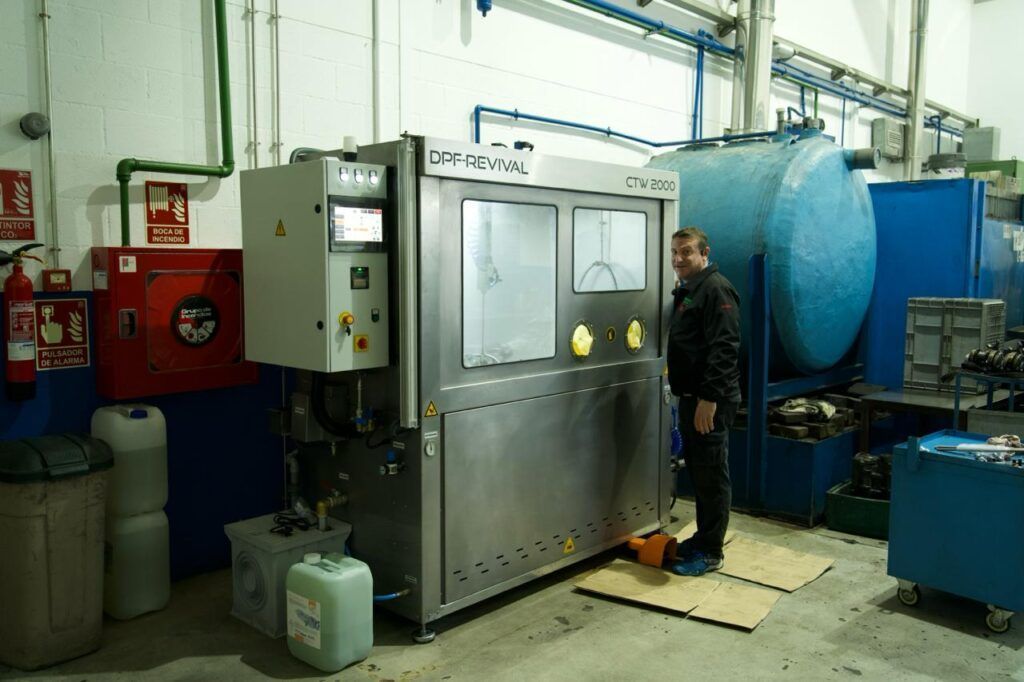
The particulate filter cleaning machines are one of the latest and most efficient methods used.
Why?
The efficiency of pressurised water particulate filter cleaning machines is based on the introduction of a two-way flow.
This means that what is achieved is to ensure that dirt does not remain in the plugs that form on the inside and come completely out of the ceramic.
In order to carry out this process, the machines employ a pressure and temperature controlledThe detergent is also a detergent that respects the material of the ceramics.
The machines allow a pre-cleaning test to check the condition of the particulate filter and after the final drying (very important to avoid breakdowns after cleaning), another test is carried out to check the cleanliness.
The answer is yes.
At present, is the method that guarantees an efficient cleaning far ahead of the previous methods. which do not completely remove ash and carbon deposits.
In the following pictures you can see a cleaning performed with the CTW2000 model on a EURO 6 particulate filter of a truck.

Here are some demonstration videos of our DPF REVIVAL machines
Proper cleaning not only improves engine efficiency, but also avoids costly repairs and reduces pollutant emissions. Keeping the filter clean helps to extend the vehicle's service life and comply with environmental regulations.
Here we explain the main benefits:
A clogged particulate filter can lead to a significant loss of engine power due to increased pressure in the exhaust system. Proper cleaning helps restore original efficiency, improving gas flow and reducing engine stress.
When the filter is saturated, the engine works harder to compensate for the loss of performance, which increases fuel consumption. A clean filter allows for a more efficient use of resources, saving money in the long run.
The particulate filter plays an essential role in reducing emissions. However, a clogged filter loses efficiency, increasing the amount of particulate pollutants released into the environment. Cleaning it ensures that the vehicle complies with environmental regulations and contributes to cleaner air.
If a particulate filter is not cleaned properly, it can become damaged, requiring replacement. This is a costly repair that can be avoided with regular, professional maintenance.
By keeping the exhaust system and engine in optimum condition, filter cleaning helps to extend the overall life of the vehicle, maximising its value and functionality.
Perform inadequate cleaning of the particulate filter can lead to permanent damage in the system and unnecessary expense. Here are some common mistakes that are important to avoid:
Many people opt for generic chemicals or chemicals not specifically designed for particulate filters. This can damage the filter materials and reduce their long-term effectiveness.
Although it may seem like a quick fix, the use of pressurised water without subsequent thorough drying can cause internal damage to the filter, as well as moisture problems in the exhaust system.
Manual or product cleaning is not always sufficient to remove the most encrusted particles. A complete regeneration is essential to ensure that the filter is fully clean and operational.
Waiting too long to clean the filter can lead to a build-up of soot and ash that is irretrievable, necessitating its replacement.
Particulate filters are delicate components. Handling them without the proper tools or attempting to disassemble them without technical knowledge can cause irreparable damage.
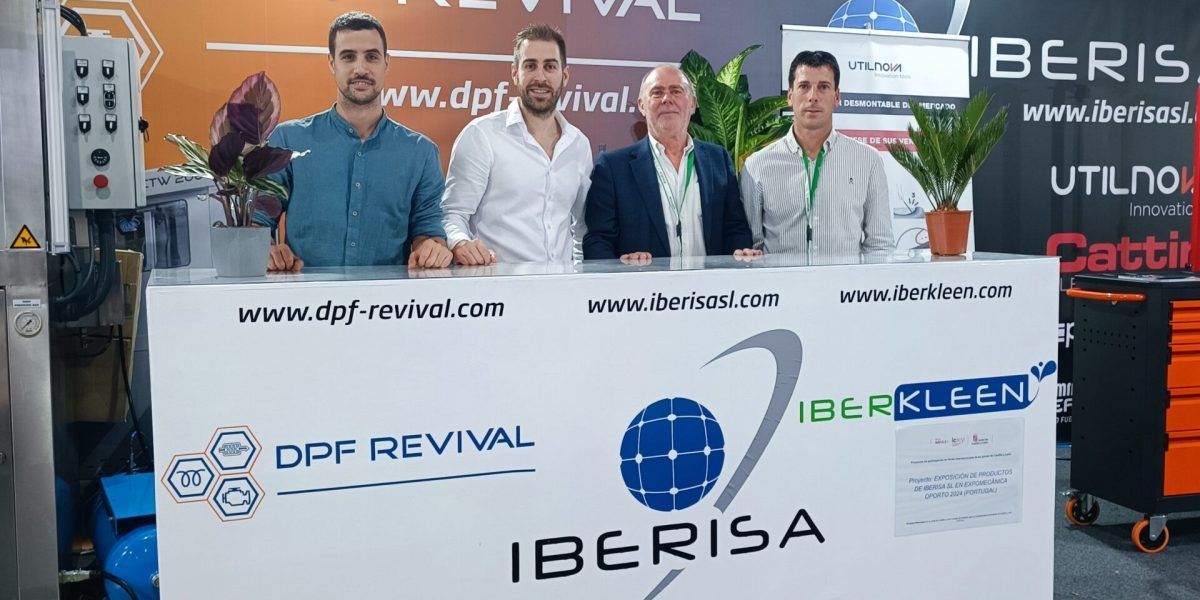
While there are home-made methods and products available to clean the particulate filter, they do not always guarantee effective or safe results.
That is why professional cleaning equipment is the best option to keep the system in optimal condition.
At DPF REVIVALWe offer specialised solutions for the cleaning of particulate filters to garages, including the use of particulate filter cleaning machines filter removal machines. These machines ensure thorough and precise removal of soot, ash and other debris, extending filter life and improving vehicle performance.
If you are looking for an efficient and professional cleaning machine, don't hesitate to contact us. Find out more about our solutions or ask our experts for personalised advice.

Specialists in the design and manufacture of DPF cleaning machines and catalytic converter cleaning machines.
DPF REVIVAL: Solutions for the cleaning of particulate filters


 Español
 Español de Chile
 Español de México
 English (UK)
 Français
 Deutsch
 Português
 Italiano
 Română
 Polski
 Русский